 14 g protein
High protein, everyday food
High protein recipes with every number worked out
Breakfasts, lunches, dinners, snacks, baking and desserts for a British kitchen. Protein per serving, kcal and the share of energy from protein sit at the top of every recipe, calculated from UK food data.
Most popular
All recipes14 g protein 30 g protein
 12 g protein
 31 g protein
 32 g protein
 22 g protein
 20 g protein
 28 g protein
Newest recipes
RSS feed 31 g protein
 26 g protein
 33 g protein
 12 g protein
 24 g protein
 31 g protein
 10 g protein
 7 g protein
Browse by category
- Breakfast18 recipes · 21–45 g protein
 Lunch & meal prep6 recipes · 31–54 g protein
- Dinners25 recipes · 33–51 g protein
- Snacks16 recipes · 11–16 g protein
- Baking16 recipes · 7–34 g protein
- Desserts12 recipes · 13–34 g protein
- Shakes & smoothies16 recipes · 27–51 g protein
- Vegetarian5 recipes · 30–39 g protein
- Cottage cheese18 recipes · 10–37 g protein
Ideas & collections
- High Protein Low Calorie Dinners
- High Protein Soups
- Low Calorie High Protein Snacks
- High Protein Chicken Recipes
- Easy High Protein Dinner Ideas
- Low Calorie High Protein Breakfast Ideas
- High Protein Pasta Recipes
- 7-Day High Protein Meal Plan
- What to Eat with Cottage Cheese
- High Protein Pudding
- Cheap High Protein Meals
- High Protein Snacks for Weight Loss
- 30g Protein Breakfast Ideas
- Low Fat High Protein Snacks
Protein guides
All 49 guides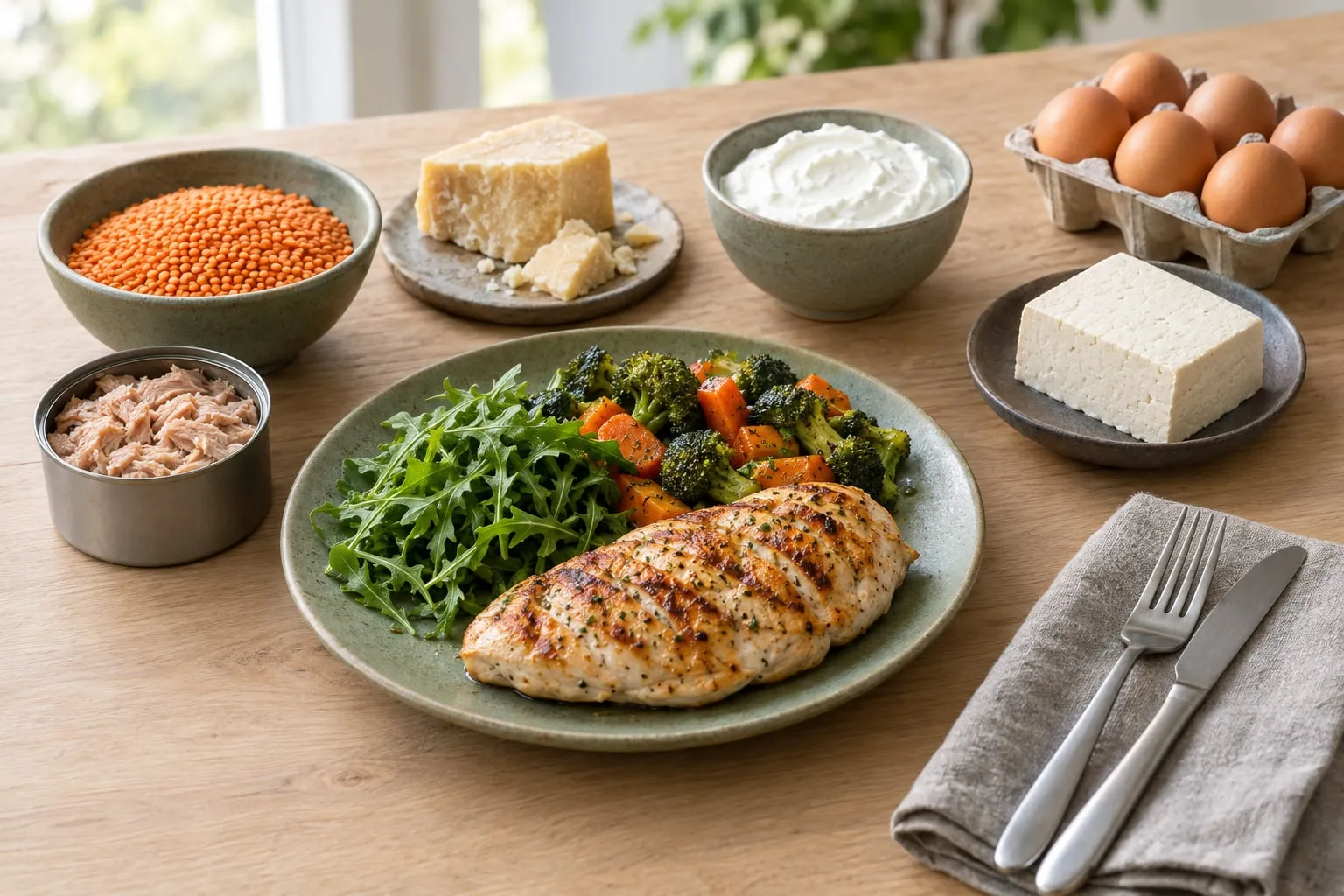
Guide
High Protein Foods: A Ranked List
High protein foods ranked by protein per 100 g and per 100 kcal: Parmesan has 36.2 g, grilled chicken 32.0 g, dried red lentils 25.6 g and egg white 10.8 g.
Guide
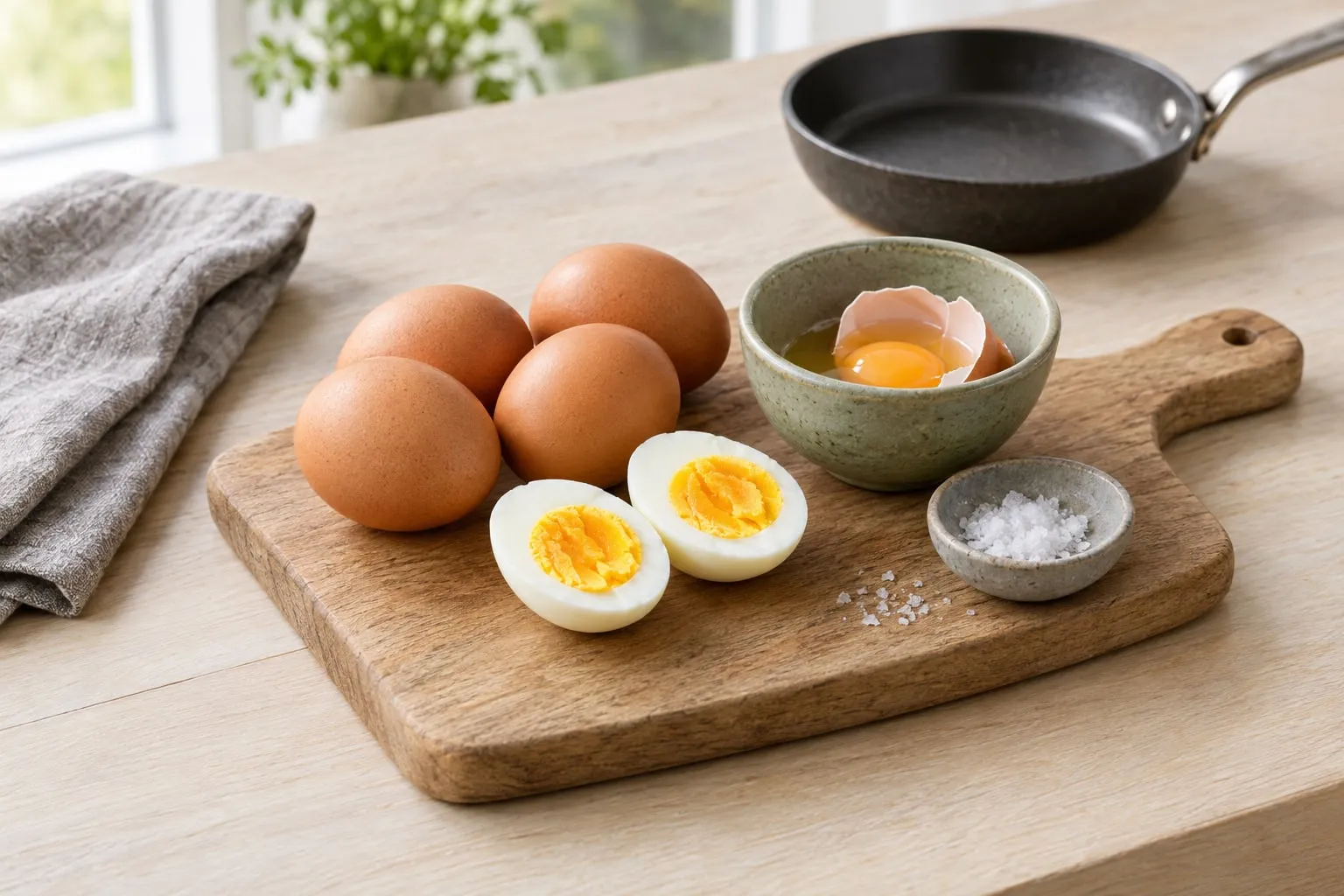
How Much Protein Is in an Egg?
How much protein in an egg: one medium raw egg has 6.3 g protein and 66 kcal. Values per egg, per 100 g, boiled, fried and scrambled.
Guide
How Much Protein Do You Need Per Day?
How much protein do I need? The UK reference is 0.75 g per kg of body weight a day, or 52.5 g at 70 kg. See food values and a worked example day.
Guide
What Is Protein and Why Do We Need It?
What is protein good for? It is made of amino acids, nine of them essential. See what it does, the UK 0.75 g per kg a day reference and food values.
Guide
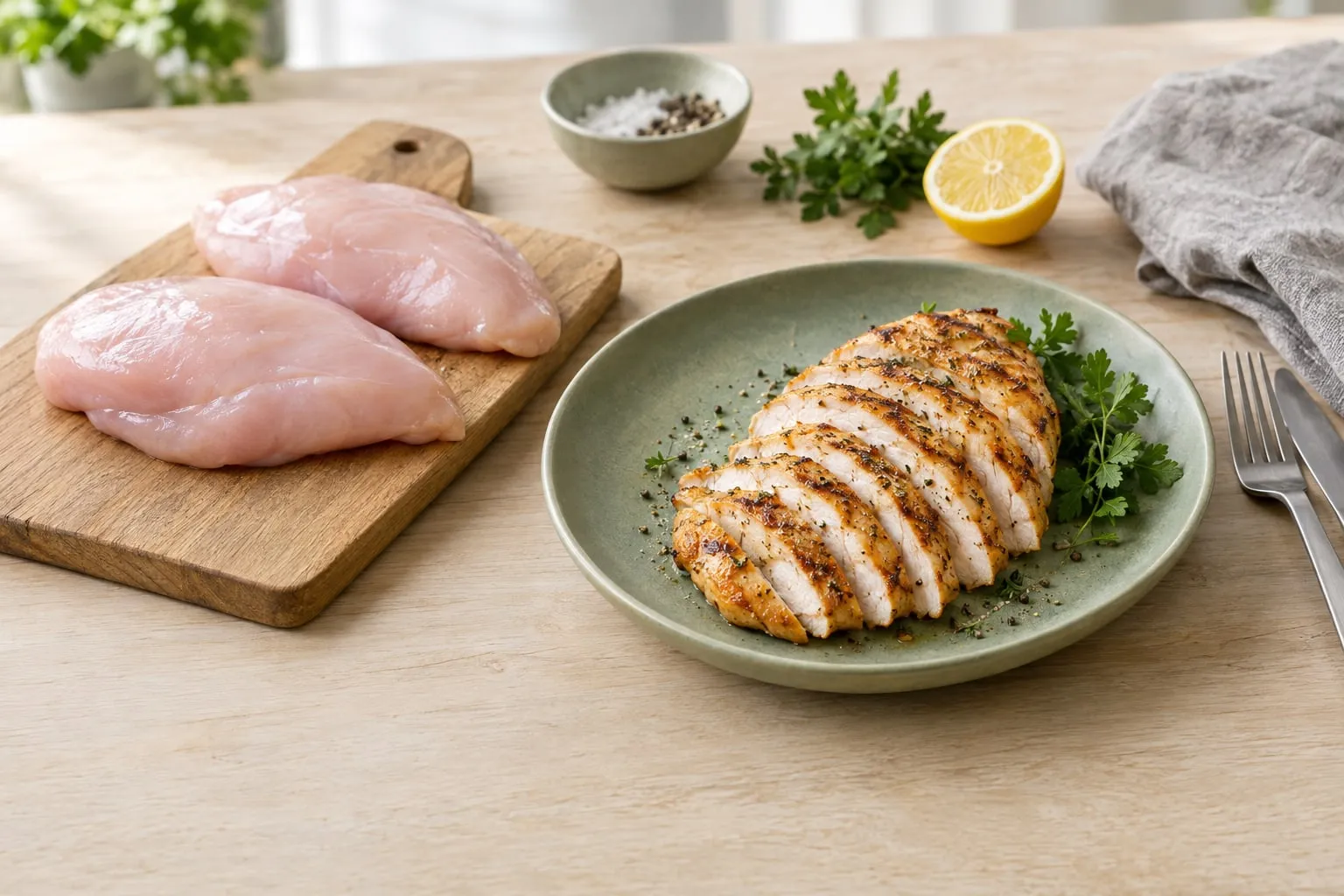
How Much Protein Is in Chicken Breast?
How much protein in a chicken breast: a raw 150 g fillet has 36.0 g protein and 159 kcal. Per 100 g raw and cooked, with fillet sizes and pack totals.
Guide
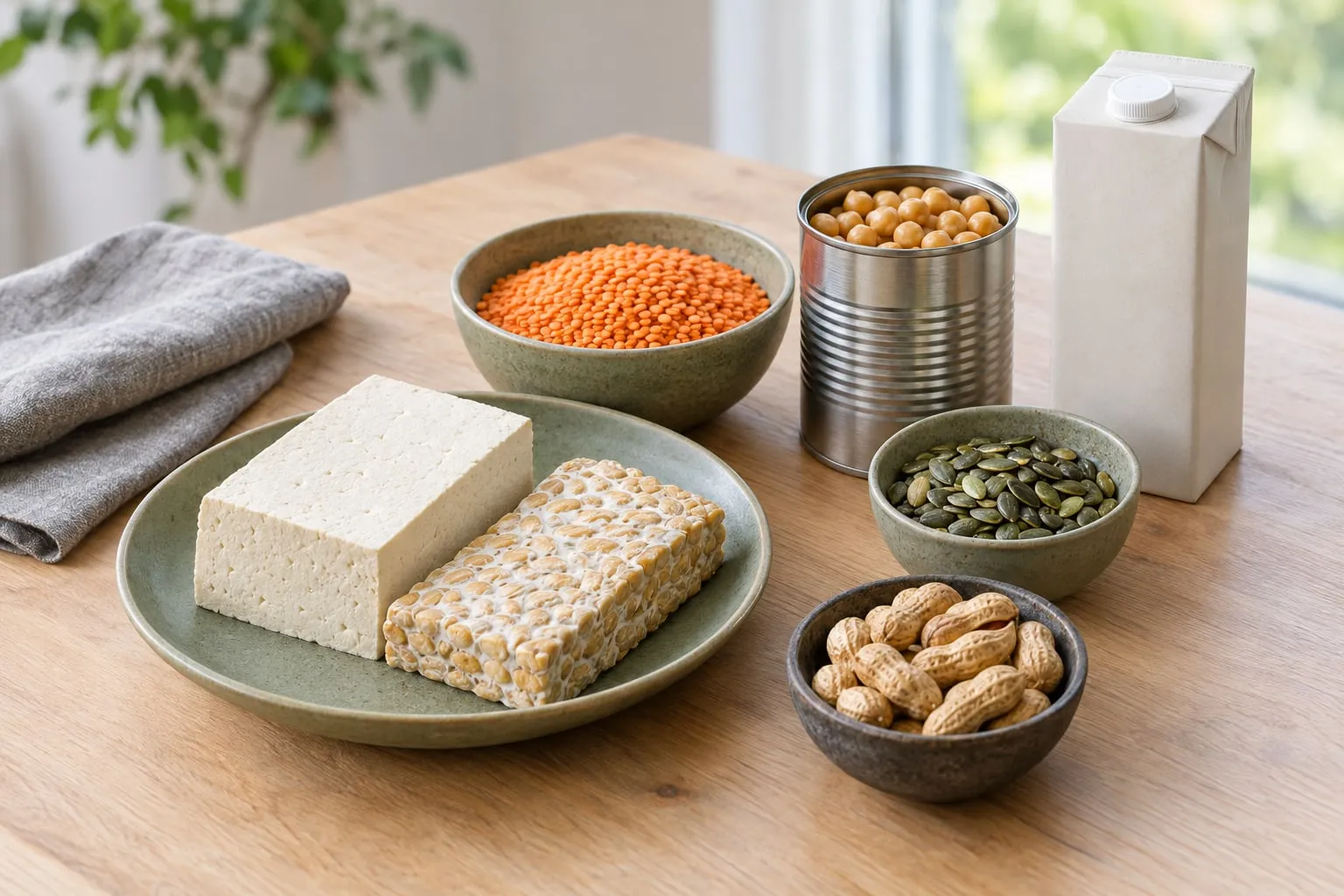
Vegan Protein Sources
Sources of protein for vegans: tempeh has 20.7 g protein per 100 g, dried red lentils 25.6 g and firm tofu 12.5 g. Values per 100 g and per portion.
Why every recipe starts with the numbers
Protein is the reason most people look for these recipes, so it is the first thing on the page. Each recipe gives the protein per serving, the energy, and how much of that energy comes from protein, before you reach the ingredient list. The figures are calculated from the exact ingredients and quantities in the recipe using CoFID, the UK food composition tables, and they include everything on the plate: the bread, the rice and the drizzle of honey.
Most recipes are built on ordinary British supermarket food. Strained Greek yogurt, quark, cottage cheese, eggs, chicken breast, tinned fish, lentils and beans carry the protein, and protein powder is used where it does a job, not by default. 5 recipes use no powder at all, and 100 are vegetarian. If you want a daily target to aim for, the protein calculator and the guide to how much protein you need per day explain the UK reference values.
Oven temperatures are given for conventional and fan ovens with the gas mark, quantities are in grams, millilitres and spoons, and the servings button scales every ingredient from half to three times the recipe.
- Recipes
- 132
- Average protein per serving
- 27 g
- Average energy from protein
- 37%
- Protein guides
- 49
Frequently asked questions
How is the protein per serving worked out?
Every ingredient in a recipe is weighed and matched to its entry in McCance and Widdowson's Composition of Foods (CoFID 2021), the UK food composition tables. Protein, energy, fat, carbohydrate, fibre and salt are added up and divided by the number of servings. A few products that CoFID does not list, such as protein powder and skyr, use a typical value instead.
What counts as a high protein recipe on this site?
At least 20% of the energy in every recipe comes from protein, which is the threshold used for a high protein claim in the UK. Each category also has a minimum per serving: 30 g for dinners, 25 g for lunches, vegetarian meals and shakes, 20 g for breakfasts, 12 g for desserts, 10 g for snacks and 6 g per piece for baking.
Do I need protein powder for these recipes?
No. 5 recipes use no powder at all and get their protein from foods such as Greek yogurt, cottage cheese, eggs, chicken, fish and lentils. Recipes that do use powder say which type works and how casein or a vegan powder behaves differently.
How much protein do I need a day?
The UK Reference Nutrient Intake for adults is 0.75 g protein per kg of body weight a day, which is about 53 g for a 70 kg adult. The protein calculator works out a daily and per-meal figure for your weight and activity level.
Which oven setting do the recipes use?
Oven temperatures are given for a conventional oven, with the fan temperature in brackets and the gas mark after it, for example 200°C (180°C fan), gas 6. The recipe also says which shelf to use.
About proteinrecipes.co.uk. The recipes and guides are written by The Protein Recipes editorial team. We take no paid placements and name no brands unless the brand is the dish. More about us · Editorial policy